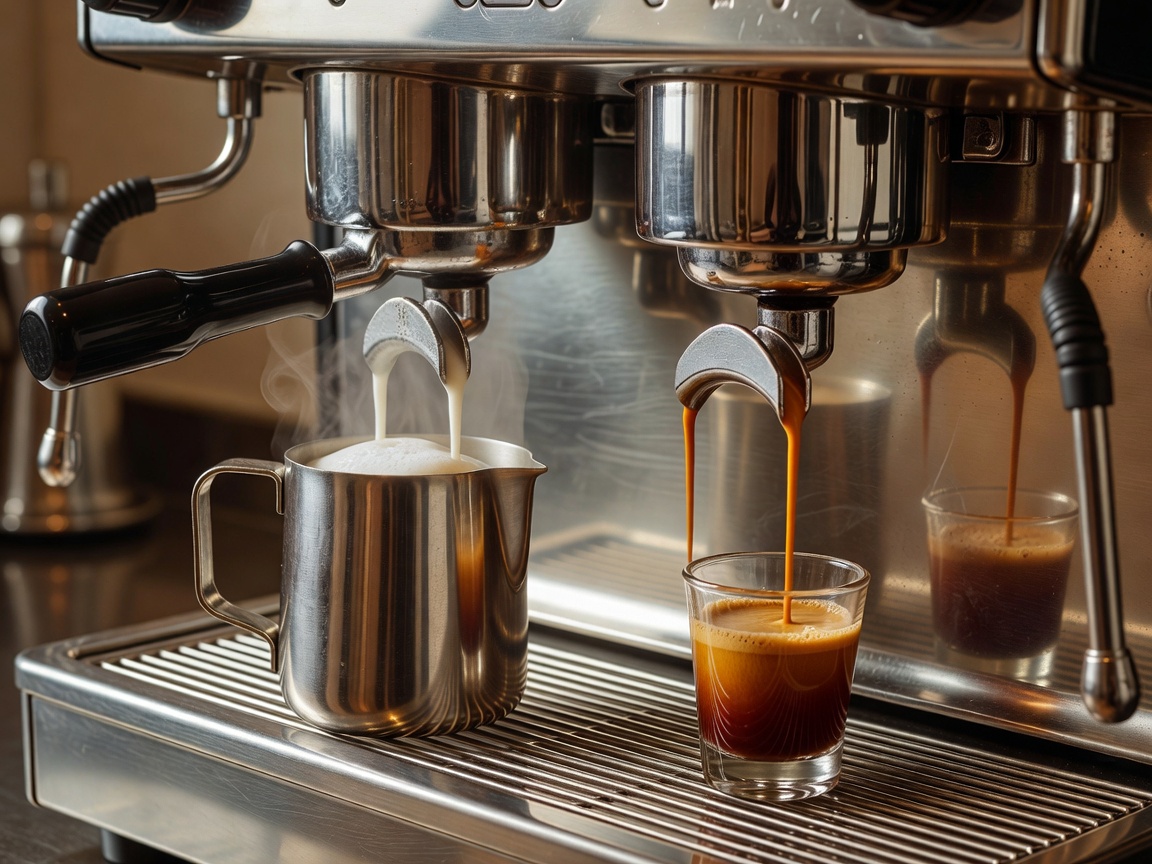
Espresso is often viewed as the purest expression of coffee. By forcing pressurized, near-boiling water through tightly packed, finely ground coffee beans, the resulting liquid is a thick, highly concentrated syrup topped with a rich, golden-brown foam known as crema. Mastering this craft requires an understanding of physics, chemistry, and sensory evaluation.
The Anatomy of an Extraction
The magic of espresso lies in its extraction parameters. Unlike filter coffee, which relies on gravity, espresso utilizes a mechanical pump to generate roughly 9 bars of pressure. This extreme environment drastically accelerates the extraction process, stripping the coffee grounds of their oils, aromatics, and soluble solids in a mere 25 to 30 seconds.
There are three primary phases to an espresso shot:
- Pre-infusion: Water is introduced at low pressure to gently saturate the puck. This prevents channeling—a phenomenon where water finds the path of least resistance, leading to uneven extraction.
- Primary Extraction: Full pressure is applied. The liquid emerging during this stage is dark and intensely flavored, containing the bulk of the acidity and sweetness.
- Blonding: As the soluble compounds deplete, the stream turns pale and thin. This late-stage extraction contributes bitterness and body, requiring the barista to cut the shot before astringency overtakes the cup.
Dialing In: The Art of the Grind
The term "dialing in" refers to the process of adjusting the coffee grinder to achieve the optimal flow rate for a specific bean. If the grind is too coarse, the water rushes through the puck too quickly, resulting in an under-extracted, sour, and hollow shot. Conversely, if the grind is too fine, the water struggles to permeate the grounds, leading to an over-extracted, harsh, and bitter beverage.
Professionals rely on a foundational recipe, typically expressing a ratio of dry coffee to liquid yield. A common starting point is a 1:2 ratio. For instance, a dose of 18 grams of ground coffee should yield 36 grams of liquid espresso. By weighing the input and output on precise scales, the barista can adjust the grind size until this yield is achieved within the target time frame of 25 to 30 seconds.
The Role of Crema
Crema, the emulsified layer of oils and carbon dioxide that crowns an espresso, is often lauded as a hallmark of quality. While visually stunning and an indicator of freshly roasted beans, crema itself is intensely bitter. Many modern specialty cafés recommend gently stirring the espresso before drinking to integrate the crema into the liquid below, resulting in a more balanced and cohesive flavor profile.
Milk Texturing and Latte Art
While a pristine shot of espresso is a marvel on its own, it also serves as the structural foundation for milk-based beverages like cortados, flat whites, and lattes. The key to these drinks is microfoam—milk that has been steamed to incorporate tiny, uniform bubbles, creating a glossy, velvet-like texture.
Proper texturing involves introducing air early in the steaming process (aeration), then submerging the steam wand to create a swirling vortex (incorporation). When executed correctly, the milk is heated to approximately 60-65°C (140-150°F), a temperature that maximizes the perceived sweetness of lactose without denaturing the milk proteins. The resulting microfoam allows skilled baristas to pour intricate designs, transforming a morning beverage into an ephemeral piece of art.